
Green Choice, take two: Nova Scotia goes back to market for clean power
Blogs | October 26, 2026
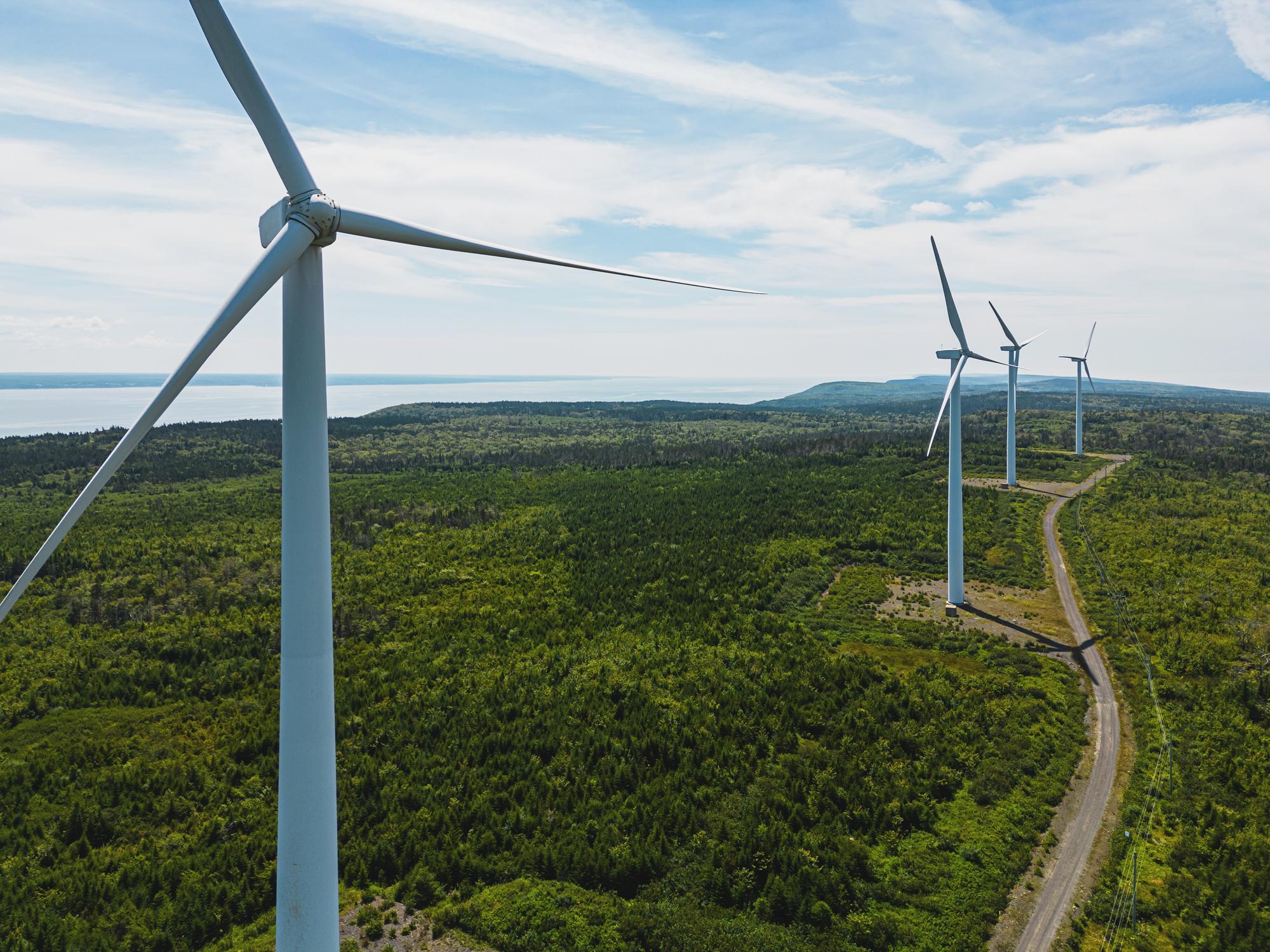
In our 2025 Renewables in Review report, we named Nova Scotia the dominant host of new corporate renewable energy deals over the past two years, after it secured 262 MW of new wind through its Green Choice Program. We also anticipated a second round in early 2026, since participant demand exceeded the generation procured in the first. That second round is now underway.
On September 10, Nova Scotia launched a new competitive procurement seeking 1,200 gigawatt hours (GWh) of renewable electricity a year, roughly 350 megawatts (MW) of new capacity. Bids are open until January 14, 2027, with project selection expected in May. The new projects will serve both program customers and all ratepayers. They will also support the province’s goal of building 1,000 MW of new onshore wind.
The Nova Scotia Department of Energy expects this to be the last large-scale wind procurement it runs directly, with future rounds moving to Nova Scotia’s independent system operator.
What is the Green Choice Program?
Green Choice is a subscription-model green tariff program. It lets large electricity customers source up to 100 per cent of their electricity from new renewable sources. New supply is chosen through an independent competitive procurement, and the selected developers sign 25-year pricing contracts with Nova Scotia Power.
The program is part of Nova Scotia's Clean Power Plan, which sets legislated goals for 2030, including generating 80 per cent of electricity from renewables. It offers a simple pathway for corporations and public institutions to contract clean, low-cost energy.
Participants pay the same rate as others in their rate class and receive a credit reflecting the avoided carbon cost in Nova Scotia’s power system. Nova Scotia Power retires Renewable Energy Certificates on their behalf for the renewable electricity they use, so they can make credible, traceable claims about their emissions reductions. Because contract costs are recovered across the ratebase, the benefits of the low prices reach all Nova Scotia Power customers, not only program participants. Nova Scotia’s green choice program offers a new model in Canada for achieving emission reductions. We reviewed the program’s design in Powering Corporate Choice.
Program participants
The program opened in December 2023 and accepted every applicant. Its 11 customers have a combined demand of about 1,100 GWh and generally use more than 10,000 megawatt hours a year each, compared with about 10 megawatt hours for an average Nova Scotia household.
They span all levels of government, post-secondary education and private industry. They include the provincial and federal governments, along with Halifax Regional Municipality, Cape Breton Regional Municipality, Halifax Water and Halifax International Airport Authority. Private sector participants are Walmart Canada, Michelin North America (Canada) Inc. and PSA Canada Ventures.
Post-secondary institutions take part in two ways. All Nova Scotia Community College campuses are enrolled as a customer, and eight universities, including Dalhousie, Acadia and Cape Breton University, joined together as the Nova Scotia Universities and Colleges Power Purchasing Partnership. The program’s eligibility rules allow public institutions using at least 1,000 megawatt hours a year to combine their demand with other institutions to meet the 10,000 megawatt-hour threshold.
The program’s flexible eligibility rules made this broad participation possible, bringing in buyers of very different shapes and sizes, from hospitals and universities to a national retailer and a tire manufacturer. That range shows how many kinds of organizations are looking for low-cost clean energy when they’re given a way to buy it.
Round one projects
The first procurement resulted in two wind projects totaling 262 MW, both are now under construction. Eigg Mountain in Antigonish County (150 MW) is being developed by Renewable Energy Systems Canada. SWEB is developing Sugar Maple in Pictou County (112 MW) in partnership with Glooscap First Nation. Both have environmental approvals, are on track to reach commercial operation by the end of 2028, and are expected to generate more than 840 GWh a year combined. With program customers’ demand still outpacing the supply secured in round one, and the province working towards its 1,000 MW onshore wind goal, Nova Scotia is now going back to market.
What’s changing in round two
In Powering Corporate Choice, we recommended that Nova Scotia undertake a comprehensive, transparent review of its first round. The province has since done that work. Peter Craig, director of electricity with the Department of Energy, told CBC that in the year since the province decided to launch another call, it consulted with industry and analyzed the first round to find possible improvements.
Among those changes, projects with a scheduled commercial operation date before December 31, 2029 will be eligible for an Early Completion Incentive until December 31, 2030 and energy rates are subject to escalation under the power purchase agreement.
Projects must be onshore wind, greater than 2 MW and no larger than 150 MW, and proponents must submit proposal security of $35,000 per MW. Proposals are scored out of 100 points, with 50 for energy rate and up to six for Mi’kmaq of Nova Scotia ownership. The final power purchase agreement has not yet been released and is under review by the energy board.
Green Choice has shown that when buyers are given a way to procure clean energy, they sign up. Our From Pledge to Power analysis found that Canada’s top 100 companies on the TSX will need roughly 7.7 GW of renewable energy by 2040 to meet their goals, yet most provinces offer them few ways to buy it. Proposals for Nova Scotia’s second round are due January 14, and we’ll be watching which projects are selected in May, and which provinces take note.