
Why are Canadian data centres turning to gas for power?
Blogs | November 19, 2026
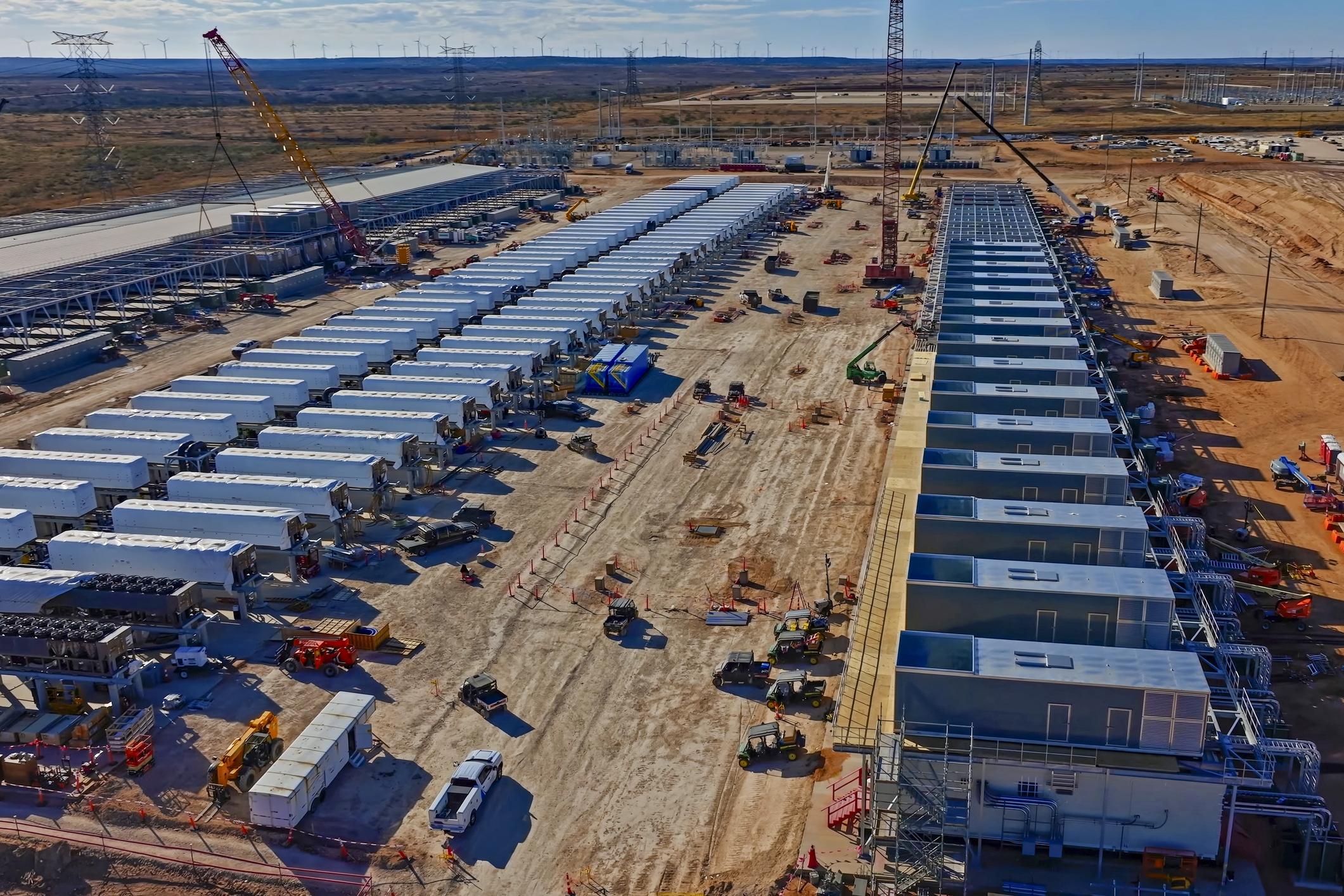
Data centres built to run AI are driving one of the largest increases in electricity demand in generations. BRC-Canada's new report, Power By Design, identified 175 announced data centre power deals across 25 jurisdictions, totalling about 126 gigawatts. To put it another way, if that capacity were combined into a single grid, it would rank as the 13th largest in the world. Despite this large scale, the deals tracked represent only a small subset of the huge number of data centres that have been proposed globally, so the actual scale of development could end up being far larger.
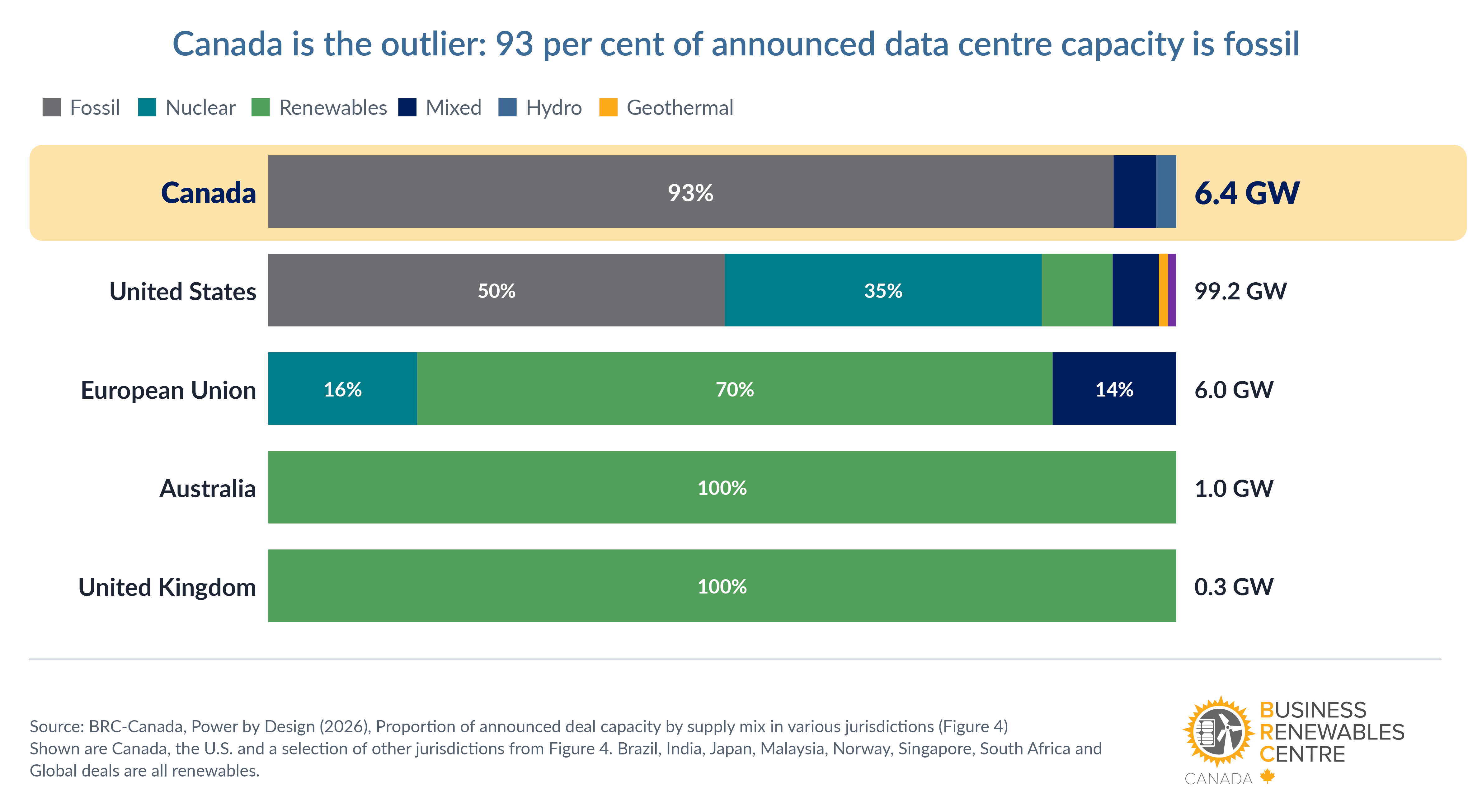
Where that power comes from differs by jurisdiction, and Canada stands out: almost all of the electricity for its announced data centres comes from gas, a pattern not seen elsewhere in the world, including the United States. Most of the rest of the world is planning data centres around renewables.
How these projects are powered will shape electricity systems, ratepayer bills and emissions for decades. The report finds that Canada’s reliance on gas is a design choice that governments are making, not a necessity, because what powers a data centre depends less on technology than on the rules shaping the buildout.
How are data centres being powered?
Despite recent focus on the rapid increase in gas generation, renewable energy remains the most common route for powering data centres. Renewables account for 112 of the 175 deals identified, almost two-thirds, and appear in every jurisdiction we studied. The largest tech companies continue to sign gigawatt-scale agreements for wind, solar and storage, representing billions of dollars of investment. They signed 21 renewable energy deals in 2025 and 31 so far in 2026, up from two to seven a year between 2022 and 2024. Renewables paired with storage have also reached 3.1 gigawatts so far in 2026.
But gas-fired deals have surged over a short time. The report identified no gas-fired deals before 2024, but deals have since more than tripled in a year, from 12.5 gigawatts in 2025 to 42 gigawatts so far in 2026. That brings the total to 55 gigawatts, or 44 per cent of the capacity we tracked, all of it in the United States and Canada.
If all of it were built, it would add at least 160 megatonnes of greenhouse gas emissions every year, which is more than Ontario's annual total emissions and more than three times those of Canada’s entire electricity sector.
Where policy allows it, many of the biggest buyers are not choosing one source over another. They are assembling energy portfolios that blend renewables with utility supply, storage, on-site generation, and in some cases, nuclear, geothermal and gas. Four pressures are driving this shift: securing power quickly, matching supply to hourly demand, working around interconnection bottlenecks and building resilience. Google’s proposed Minnesota facility packages 1.4 gigawatts of wind and 0.2 gigawatts of solar with a 100-hour long-duration battery. Meta has secured offtake rights to 2.8 gigawatts of nuclear capacity for a facility with 1.2 gigawatts of on-site batteries. Amazon has announced a 7.7 gigawatt on-site gas campus in Texas and has also acquired a 2.4 gigawatt solar and battery project. The same companies sign very different agreements depending on where they operate: in Australia, Amazon has signed 14 power purchase agreements for renewable energy.
What sets Canada apart?
Canada’s 10 announced deals total 6.4 gigawatts, almost all of it gas-fired self-supply, despite the country’s abundant clean energy resources. In the deals we tracked, the gas buildout is concentrated in two countries: the United States and Canada. Canada stands apart even from the United States, where gas deals sit alongside renewable, nuclear and geothermal projects. Across Europe, Asia and the rest of the world, data centres are mostly planned around renewable energy.
Alberta and Texas both have abundant wind and solar resources, yet developers there are turning to gas. Interconnection queues have swelled, policy changes have discouraged investment in wind and solar, and market rules leave few other options. Alberta’s draft approach for large-grid connected data centres allows only thermal generation, and in Texas, five projects totalling 20.6 gigawatts have used on-site thermal generation to avoid interconnection.
Our analysis found that policy and market structures can shape these choices as much as, or more than, the resources a region has. Renewable energy is often the cleanest and most cost-competitive option, but in contrast to the rest of the world, including the United States, Canada has limited the ability of data centre developers to use clean power.
What happens when policy favours clean power?
The Canadian outcome is not inevitable. Some jurisdictions have used policy to point data centres toward clean power. Ireland now requires new data centres to meet at least 80 per cent of their annual demand with new renewable projects. In Minnesota, Google and Xcel Energy have proposed a package of wind, solar and long-duration storage to make the facility run on clean energy 24/7, paired with a charge to cover the costs the data centre creates.
What does this mean for our electricity systems?
Each of these deals will shape the grid it connects to: what gets built, who pays for it and how much carbon it adds. Canada’s rush to gas reflects choices made by provincial governments, not a necessity. These choices are not always deliberate ones, but they risk locking in emissions for decades. Where connection processes and cost responsibilities are clear, or procurement pathways are open and flexible, buyers can contract for clean supply; where they are not, buyers turn to gas.
Jurisdictions that align energy policy, infrastructure planning and market design will be best placed to attract investment and protect ratepayers. Data centres are only the first of many new large electricity customers. The rules written for them now will shape how the next wave of demand gets powered, and whether that power is clean, affordable and secure.
Read the full report to see what jurisdictions are getting right.